Sometimes the question you bring home from a meal is very small: what was that? You liked a texture, a seasoning or something you could not name. Finding the name is useful if you want to eat it again. But at an izakaya, the answer can also lead to a little of the life behind the menu. One evening, a fried sardine dish did that for me.
This note began with a question I repeatedly see travelers asking. The answer is my own, shaped by living in Tokyo rather than by a list of search results.
Conversations with the owner like that are part of the pleasure too.
It looked firm. Inside, it was wonderfully fluffy.
I enjoy looking through the menu in an old-fashioned izakaya and imagining the evening ahead: this dish with a beer first, then that small plate with some sake. Choosing is already part of the pleasure. On this visit, the dish I chose with my beer was made with sardines.
I do not remember its exact name. From the outside, I expected something firm, but inside it was wonderfully fluffy. It was delicious. In conversation with the owner, I learned that the woman who ran the izakaya had adapted an older recipe, and that they had been serving the same version for fifty years. That is the story I was told there, not a history I have independently verified.
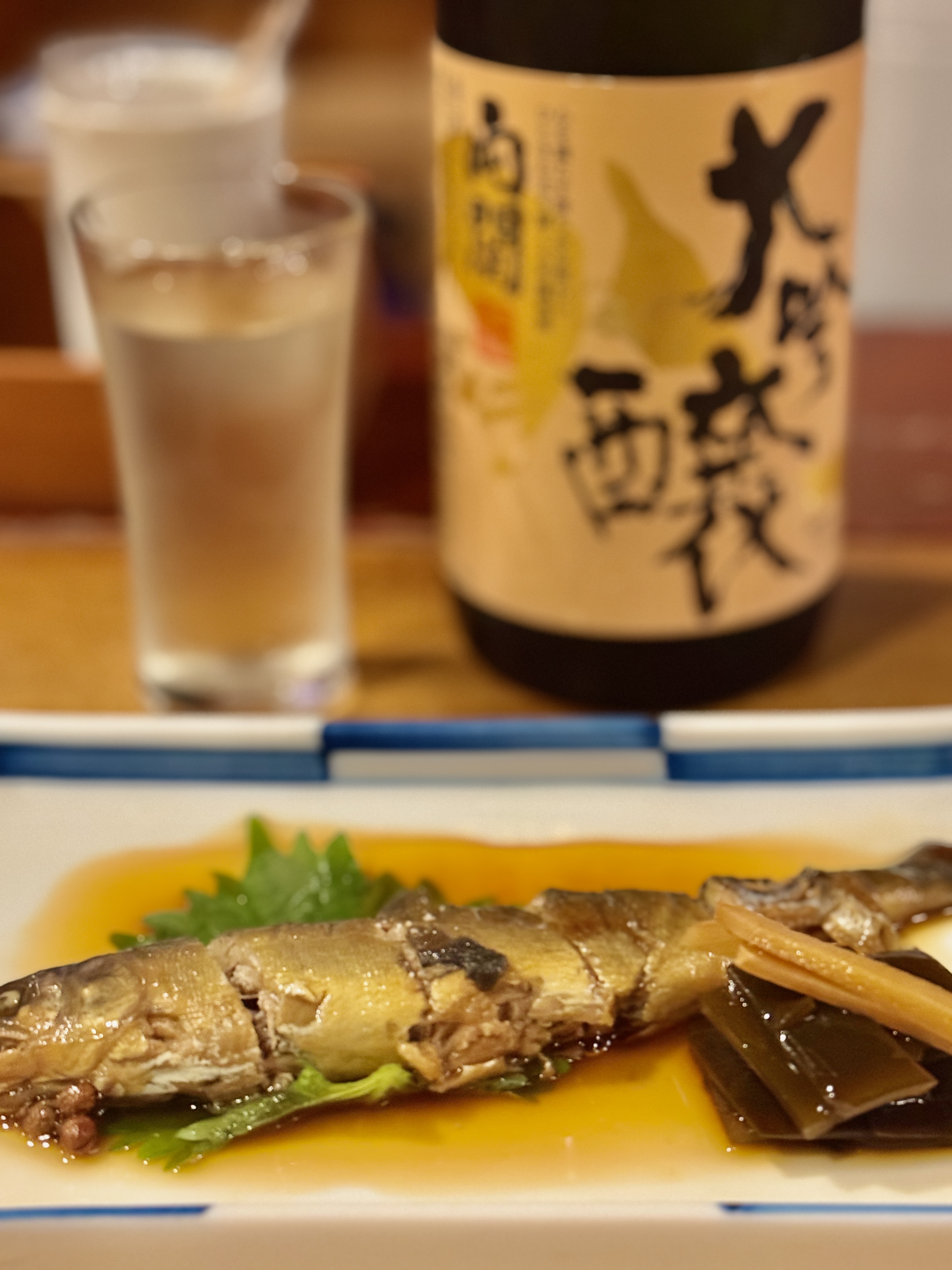
The photograph is another part of the meal
The fish in this photograph is not the fried sardine dish. It is roe-bearing ayu simmered with sansho, which I had with sake. I want to keep that distinction clear: a photograph of one plate cannot explain the ingredients or preparation of another.
What connects the two dishes for me is the enjoyment of choosing what comes next. I am not suggesting a correct sequence of drinks, or that you need alcohol to enjoy an izakaya. This was my evening. The small surprise in the sardine dish, and the conversation about it, were as much a part of it as the pairings.
Start with the thing you actually want to know
If a dish interests you, a simple question is enough: what is it called, or how is it cooked? You do not need a clever opening or a plan to make friends with the owner. Point to the item on your own menu and keep the question short. If the name is what you want to remember, ask whether they could write it down.
When you do not share a language, a short translated question may help, but it may not produce a long conversation. A brief answer is still an answer. If there is an ingredient you need to avoid, ask clearly before ordering; a photo or a remembered dish name is not enough to establish what is in this kitchen's version.
Let a small conversation stay small
The owner has a restaurant to run. If someone is carrying dishes, taking an order or trying to catch up, I would leave the question for a quieter moment. If the answer is short, thank them and enjoy the food. A good meal does not owe us a story.
When a story does arrive, there is no need to turn it into an interview or record the person telling it. What stayed with me was the unexpected texture and hearing about a recipe that had remained part of this kitchen for so long. I can share that memory without naming the restaurant or making its owner part of someone else's itinerary.
At your next meal, if something genuinely interests you and there is a suitable moment, ask one small question about it. You might leave with a name to remember. You might hear a story. Or you might simply finish a very good plate of food. None of those is a disappointing result.