There is a shop where I end up buying a small sake cup each time I visit. The cups do not match, but every one adds a little pleasure to having sake at home. I am not trying to complete a set. That is the part I would keep in mind if you find yourself in a Tokyo shop, interested in something but unsure what to say. You can begin with the object in front of you, rather than knowing the right words for everything on the shelf.
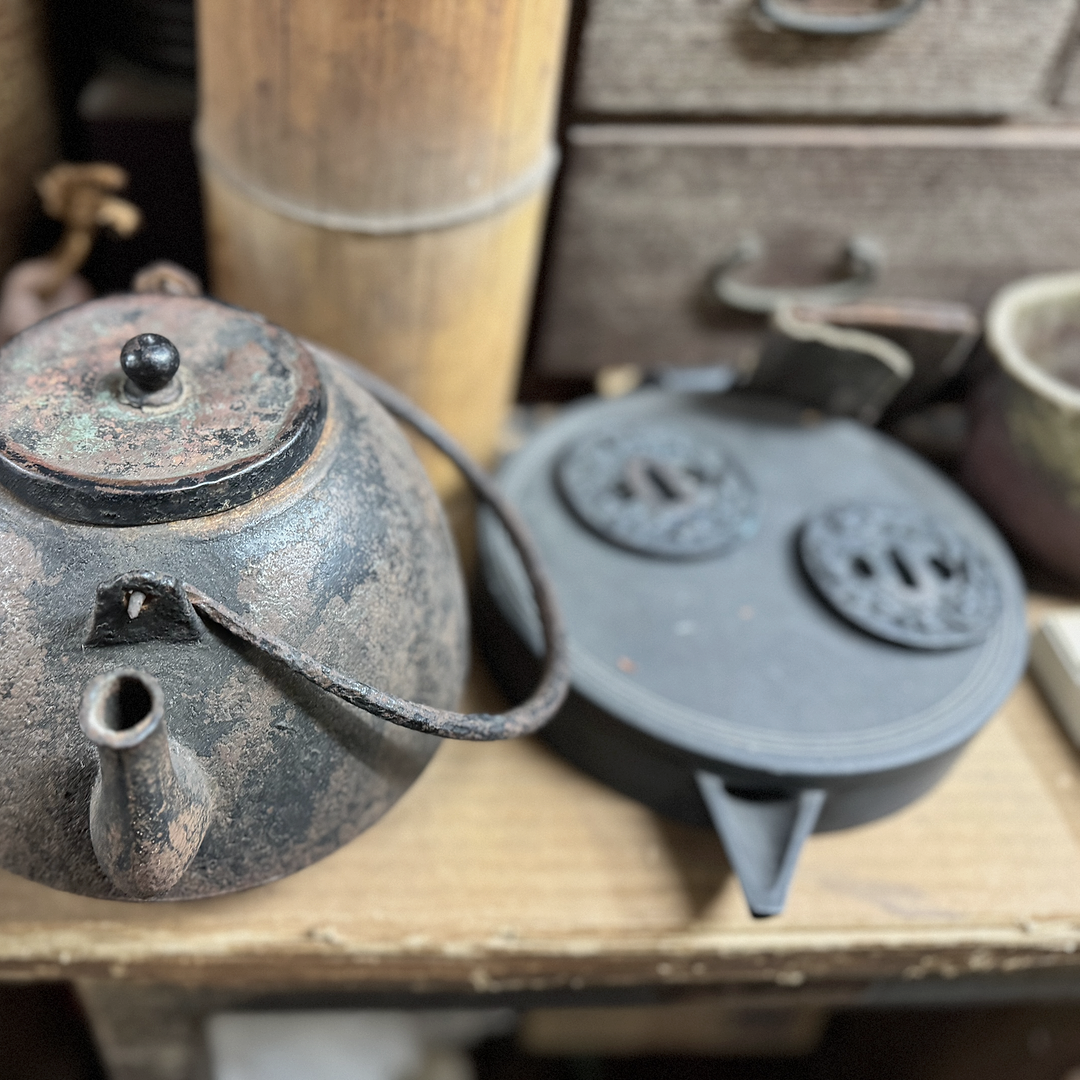
This note brings together recent traveler questions about shopping for everyday objects, clothing and small gifts. My growing collection of mismatched sake cups is a personal experience; the suggested questions are not a transcript of a conversation in the shop. The photograph comes from the site's existing collection. It does not establish the age, origin or usability of the objects shown.
You can be curious about one thing without being an expert in the whole shop.
First, ask to take a closer look
If you are unsure whether you may pick something up, leave it where it is and ask. “May I pick this up?” is enough. You can also show the Japanese phrase 手に取ってもいいですか? Wait for an answer; the person serving you may prefer to bring it to the counter or show it themselves.
Treat a closed box, a display pen or an unfamiliar lid in the same way. Ask before opening or trying it. A small shop is someone's working space, and a crowded shelf is not a reason to rearrange things until you can see better. Follow any instructions, and keep the passage clear while you look.
Say what you want to know, one thing at a time
Perhaps you like a cup but want to know its size. Perhaps a garment looks right but you need to ask whether you can try it on. Perhaps you want to know whether a notebook's cover or its pages are being described on the label. Point out the item without touching it and ask the specific question.
If you use a translation app, write a short sentence and show the screen. Ask a follow-up after the first answer, rather than presenting your entire shopping list at once. This is a suggestion for making the exchange manageable, not a promise that every shop can offer a long explanation or support every language.
Ask about the price before deciding
If a label is unclear, ask for the price of that particular item and the total you would pay. If several pieces are displayed together, check whether the price is for one piece or the group. There is no need to pretend you understood a number you did not catch; ask to see it written down.
A budget can be stated plainly: “I am looking for something within this amount.” That gives the person a useful boundary, if they are able to suggest alternatives. A friendly explanation does not oblige you to buy. If it is not right, thank them and leave the item with them.
Separate what you like from what you know
With a second-hand object, appearance alone is not enough to establish its age, maker or intended use. Ask what the seller knows and what remains uncertain. If you hope to use an object for food or drink, make that clear. Do not turn a guess or an unclear answer into reassurance that it is suitable.
The same restraint belongs in the story you tell afterward. You can say you liked the weight, shape or color without inventing a history for it. My cups do not need a grand explanation to make an ordinary evening more enjoyable.
Finish with the practical question
Before paying, ask about any care instructions that matter to your intended use and how the item can be packed for the journey. If returns or exchanges would affect your decision, check the shop's terms before buying, not after leaving Japan. This note is not a guide to tax-free shopping or customs; verify any relevant rules with the official authorities for your route.
You may come away with an object, or simply a better idea of what you are looking for. Neither outcome needs to become a performance of being a knowledgeable traveler. A clear question and a thank-you are a good place to start.
Before your next shopping stop, choose the one question you need answered: may I handle it, what does it cost, or will it suit the way I want to use it? Begin there. Leave room to listen, and room to decide that it is not for you.