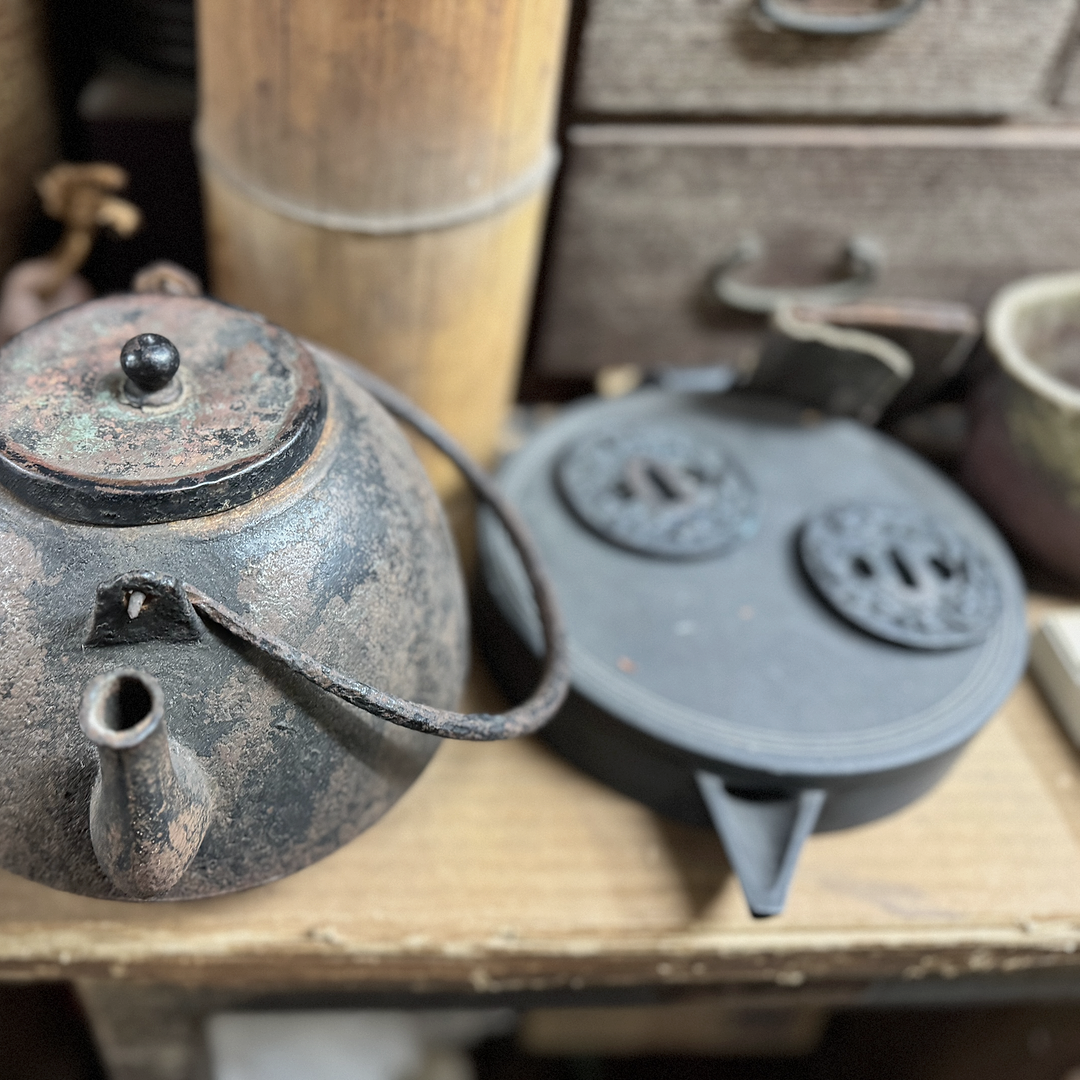
Look at the kettle on the left. The mottled surface, the curved handle, the wooden shelf beneath it. There is plenty to look at without seeing the entire shop. I have shared this antique-shop photograph before, but here I want to look at it differently: as a reminder that a picture can hold one small detail without trying to take the whole room home.
This note brings together travelers' interest in photographs and local shops with questions about respecting the places they visit. The shelf in the photograph is from my own collection.
A question before raising the camera: what do I want to remember, and who else would be in the picture?
Start with what caught your eye
The appeal of a small shop is not always something a wide photograph can explain. It may be the shape of an object or the way several things have been placed together. In this image, the worn surfaces are visible; the owner and other customers are not. That is a useful possibility to keep in mind, not proof of what any shop allows.
Choosing a detail is also different from rearranging a display. I would leave the objects where they are and ask before handling them. The shelf is part of somebody's shop, not a set assembled for my photograph. If the angle does not work from a place where I am welcome to stand, I can leave the picture untaken.
Ask about this photograph, not photography in general
First look for notices and follow the staff's instructions. If it is unclear whether photographs are welcome, ask before taking one. A short question such as “May I take a photo of this?” makes the request specific. Indicate the object without touching it. If someone is serving a customer, wait rather than interrupting the transaction.
A yes to a photograph of a kettle is not an invitation to photograph the person behind it. Ask the person separately if you want to include them. If the answer is no, or you cannot tell whether they have agreed, put the camera away. Buying something does not change that.
Notice the edges of the frame
Before taking the picture, look beyond the subject. Is another customer's face reflected in glass? Is somebody's phone screen visible? Are you standing where a person needs to pass? A closer frame may leave those details out, but it does not replace permission or the shop's rules.
Nor does a photograph need to be a video. A slow sweep around a room can include people and conversations that a still image would leave out. I would not turn a brief agreement to take one photograph into permission to record the room.
Decide what to share after you leave
Keeping a photograph and publishing it are separate choices. If you intend to post a picture of someone or a shop interior, make that intention clear when asking. Before sharing, check the image again for people, names and other details you did not mean to include. Do not assume that a location tag is necessary.
I sometimes keep an address out of a story. That is not a claim that a place is secret or that only certain people deserve to find it. A story about a kettle can remain a story about a kettle. If the shop wants visitors to find it, its own public information is a better starting point than a guessed location.
JNTO's responsible-photography guide provides broader guidance on asking people, following signs and keeping out of the way. This note is about considerate choices, not a summary of photography law.
On your next visit to a small shop, notice one thing before reaching for your phone. If you want a photograph, check the rules and ask about that specific picture. If it is not welcome, a few words written afterward can keep the memory too.
Further reading: JNTO: Responsible Photography in Japan